Showing posts with label Travel. Show all posts

Wednesday, January 17, 2018

Sights and Sounds of Calcutta

Calcutta it always will be, especially at Christmas!  Busy, bustling, bursting at the seams...  A way of life and a spirit very different from other Indian cities - but as everywhere, some things have gone, some have changed and some continue, almost the same over time.


The pastry shop Flurys, now Marwari acquired but as efficiently geared for Christmas as it used to be, with the same eclectic cactus collection on the pavement outside.


Nahoums is still alive, the last Jewish bakery, with the last of its descendants running it and churning out their famed cakes, pastries and puffs.

Jazz has not been so fortunate, with the passing of the much loved jazz guitarist Carlton Kitto.  Wondrous music played in a down to earth manner with little fuss and a lot of happiness.

https://www.youtube.com/watch?v=fAH7X7LoKd4

Happiness- also embodied in steaming cups of Darjeeling tea, meltingly tender sandesh (a sweet) in banana leaf packets, dazzling orange marigolds, delicately woven sarees.  A fragile but still existing world.


Closer to home is the sprawling Gariahat market, with its mounds of fresh fish and seasonal vegetables.  We walk down in the mornings, and decide on our menu for the day.


My favourite tonic (that apparently only die hard enthusiasts still partake of) - tender bitter neem leaves with fresh haldi (turmeric).  I have seen this combination only in Calcutta.


Sunday mornings are unforgettable, not because I indulge in jalebis and kachoris (a favourite fried and heavy breakfast) but because the local Baul singer comes by, singing incredible songs of faith, love and remembrance.

Each time we visit, we leave with incredible memories.


Saturday, February 11, 2017

A Trip To Kolkata

Kolkata is always an interesting city to visit.  It is filled to the brim with sound and life and incredible street scenes, and overflows with people who are on average more temperamental and vocal than those in many other parts of the country.  Partly because it has not been able to attract much industry, it remains a family oriented city - one sees a lot of middle aged and elderly people moving about (the men often clustered together gossiping in their 'addas', the women bustling in groups or ferrying their children between school and tuition classes or shopping or doing arty stuff!).  Despite the noise and the rush, if one manages to time things correctly, there are quiet spots and peaceful spaces to be found.

My little son and I had developed a nice routine - we would wake at the crack of dawn (the best way to function as Kolkata lies so much to the east that dusk approaches by five in the evening), have a delicious breakfast of local fruit (very hard to find yellow 'desi' papaya, wonderfully sweet and juicy little Darjeeling oranges and more), then head to the lakes.  The lakes and the surrounding parks are very peaceful early in the morning.  There are some morning walkers and a motley group of young men doing miscellaneous exercises - for martial arts, wrestling etc. but in the relaxed Bengali way, stopping every few minutes to rest.  Most of the old men would stop to say, "Hallo dada (older brother)" to my son!).  Policemen stand about, talking about subjects like what a pity it is that little children must be compelled to carry big bags and so on.  The lakes are full of fish; amazingly they are also clubs along the banks that offer very professional training in swimming and rowing.  Regattas are often held in the mornings.


We ate large meals of tender winter vegetables, fresh hill greens and ferns and delicious winter fish.  We would spend the afternoons slumbering - the Kolkata sun (as Bengalis say) is sleep inducing!  The air was still a little cool and we used light quilts, hand stitched, of the softest old cotton sarees, made even softer by decades of washing, their colours surprisingly intact.  These quilts make use of the traditional kantha stitch that now adorns many fabrics, sarees (and even a little cloth elephant in London)!


Evenings were spent in shopping, visiting tea shops or sweet shops or walking by the lakes again- the lakes look very different in the light of the setting sun.  As the weather was still cool, all the sweet shops were filled with notun gur mishti - sweets made from the new (year's) palm jaggery.  Tea shops typically serve Anglo Indian fare - sandwiches, pastry, puffs, pies (and even delicious scones!) along with Darjeeling tea.

We bought various bits of food to take back - the local varieties of rice, which are all very different from what we get in other parts, kasundi (a Bengali piquant mustard paste eaten with fried fish and other such stuff), palm jaggery, pumpkin flowers (or pumpkin blossoms, as my son calls them) which are delicious when dipped into a batter and fried and freshly harvested turmeric and tiny bitter neem leaves.  I have often wondered what to do with fresh turmeric - it's so mild and aromatic but is a pain to peel and grind for every dish.  The wise Bengalis (especially women) eat little nuggets of it raw, along with neem leaves.  My relatives turned up their noses but I quite like it and find it very good for my liver, and my little son also chomps it down quite happily (asking every morning for his meen leaves and haldi)!


One morning we went to the riverside and took a row boat down the Hooghly.  It was peaceful (and not surprisingly - sleep inducing!).  This was how we spent much of our time - outside with flowers, fish, the spring air, the river and at home, with our excitable, endearing Bengali family.


Saturday, April 23, 2016

Turkish Treats

Turkey is one of my favourite countries to visit.  Fortunately its easy to do from India; it's just a six hour flight from Delhi to Istanbul.  Apart from all else, I really enjoy tasting Turkish food - it is fresh, wholesome, strewn with nuts, fresh fruit, herbs, honey in combinations one doesn't find elsewhere.

I haven't visited Turkey in a while but recently my husband had an eight hour stopover in Istanbul.  Fortunately he braved the long exit queues and went into the city.  He took a tram, crossed the Golden Horn via the Galata bridge, got off at the Karaköy tram station (about a 45-50 minute journey, with the metro service available about every 5 minutes) and went in search of - some food!

He brought back with him assorted boxes of delicacies - black olives, peynir (delicious, stringy Turkish cheese typically eaten with freshly made bread), from a gourmet store called Namli Gurme.  From an adjacent store,  Köşkeroğlu, he bought baklava stuffed to the brim with nuts and lokum (Turkish delight).

We are eating all of this (in small rationed doses) for breakfast each morning.  And we feel we are truly basking in Turkish delight!

Just for information, here are some pictures.  Everything that was bought came perfectly packed in his hand baggage, and kept very well (for a week or ten days, as its being so rapidly consumed!) in the refrigerator.  We have actually kept Turkish olives refrigerated for years and they still taste very good.  And the baklava, with all its thin layers of pastry and very thick layers of pistachio or walnut still remains crisp despite the generous drizzles of honey (the power of filo pastry)!

Assorted Baklava and Turkish Delight (lokum)

A good shop for baklava and lokum

Baklava and lokum, overflowing with nuts

A good source for peynir, olives and more

A packet of peynir


Thursday, December 31, 2015

Ending The Year In Kolkata


I was in Kolkata for Christmas.  During the rest of the year, I don't mind calling it Kolkata but at Christmas it's always Calcutta for me.  Changing times, political climes and tastes have altered Park Street and other Christmassy neighbourhoods but there is still something special - an extra spark in the typically excitable Bengali, at Christmas.


I spent this time mostly in and around Ballygunge, where I stayed.  It's an old residential area with a large, bustling (and well known) local market.  In the mornings, I walked past old houses that had seen four generations (or more), some spick and span and some old and cobwebby.  Vendors walked down the streets, pushing little carts.  The much publicised (and oft criticised) rickshaws still plied here, moving adroitly in and out of the narrow streets.  Yellow Kolkata taxis honked their way through.


The market was a short walk away.  I like to visit it early in the morning, before the traffic builds up.  It's always bustling and loaded with fresh produce and seasonal specials.  Vegetables are piled high everywhere.  On weekends, people come from the outskirts to sell special and unusual local vegetables - ferns, delicate greens, herbs and more.


The fish market is expectedly large and noisy.  Glistening fish lie on gleaming steel counters indoors and on wooden planks, ice filled cane baskets or atop fresh green banana leaves outdoors.  There is a fish for every meal, occasion or whim!


Individual book shops still survive despite the ubiquitous chains.  One manages to get a slightly different selection here, both for adults and children.  A particularly nice book I read this time (for children but nice for anyone) was 'The Cloud Tea Monkeys', written by Mal Peet and Elspeth Graham and wonderfully illustrated by Juan Wijngaard.  It is a story set in the Assam tea gardens during the colonial period.

A visit to Kolkata implies being plied with lots of food - The typical Kolkata fish chops, rice, dal and gandharaj nimbu (a very fragrant and special lime, which I have now planted in my garden).  Winter squash, tender radishes, greens, lobster and more.


And sweets!  Local sweets can never be forgotten even in the midst of Christmas confectionary and we have a terrific selection of goodies awaiting us at home.  We like our tried and tested old sweet shops but every corner has a little one, serving tea, sweets and savouries.  This is the season for fresh palm jaggery (notun gur) which imparts a delicious sweetness that is flavourful but not cloying.  A very special taste.


Each neighbourhood seems to have new bakeries now, and their standard is quite high.  Amongst the many, we discovered  Mrs. Magpie, a quaint bakery located near the lakes (we walked around the lakes every afternoon as Nayan peered down to look at the fish, threw leaves in the water and climbed little hillocks that must have appeared like giant mountains to him).  This tea shop was always overflowing with people, and had some lovely little cakes, scones and biscuits to offer.


A visit to the local jeweller was a must and this time I ordered a bangle for myself, which he will make and keep for me in iron and gold.  It is a very traditional 'marriage' bangle that new shops no longer stock because it is not glittery enough.  The wall of the jeweller's shop has a picture of a yogi and fresh flowers are offered to this image every day.  Indeed, Kolkata is the homeland of yogis (of course nothing compared to the Himalayas but several enlightened and accomplished teachers have lived here over the centuries and have reached out to many people all over the world).  This spirit seems to permeate the very soul of the city - at least that is what I feel and sense each time I visit.  In the midst of the noise, grime, dense air, raucous traffic and extra loud human voices, it is easy to forget this, but one only has to look at little streets and corners and close one's eyes - and the signs of strong positive traditions stand out.


This is also the last blog if the year, and with it I send my new year wishes to all of you.  I hope that despite the tempests that might swirl about you in the coming year, you are also touched by fragile rainbows, freshly fallen dew, orange and gold sunsets, silvery moonshine and starbursts.  By all the beauty that passes through and leaves us with a sense of peace and wonderment, reminding that the world is essentially a good place.  Happy new year!

Monday, January 26, 2015

Trekking In Tekal

Bangalore is surrounded by hilly outcrops, streams, rivulets, patches of forest and other places where one can spend a day trekking, climbing or swimming.  Of course, these have become more inhabited, polluted and/or crowded with visitors over the years.  One exception is the mammoth rock cluster called Tekal.  Unbroken by regular paths or green cover, it looks more daunting perhaps than it actually is.  There are no religious trails or holy sites at the top of the hill, so the number of visitors is relatively small.  It is, of course, a haven for rock climbers, and this is how my adventures on Tekal began – and continued- each trip being memorable for its uncomfortable moments (and also, once I relaxed, for the stark beauty of the place).

The first time I visited, perhaps twenty years ago, was with my husband and some of his friends who were keen rock climbers.  By keen I mean that one of them won first position in the state wall climbing contest.  Along with her were two others who didn’t do too badly in the contest either, one has now started a full time trekking company, and so on.  I myself am no climber and have a very average head for heights, so you can imagine my initial feelings when I saw rock upon rock that I had to clamber over.  

Appearances are deceptive in Tekal; though it initially looks insurmountable, almost everyone reaches the top (and returns relatively unscathed!) for there are just a few tricky sections, and the rocks are not as slippery as they might appear.  The tricky sections, of course, look innocuous, and vice versa, so one really needs to stop judging a rock by its looks.  One also needs to realize that one will not slip and fall through the cracks and spaces between rocks that one has to leap over.  Then you can relax and enjoy the view!

On my first trek there, I was lagging behind, trying to get familiar with the feel of the rocks.  It didn’t matter how slow I was, for I would eventually reach a point where everyone else was standing, working out some tricky manoeuvres on a rock.  Here I would catch my breath and wait till they finished and then lag behind some more.  In the middle of our journey we met two barefoot boys from an adjacent village, who happily leaped (higher and faster than what perhaps was necessary) and periodically held out their hands to try and get me to move faster.  Hands were a big no-no amongst the regulars (even your own hands, when descending slopes), so I valiantly and successfully managed on my own two feet.  I learnt some nice things in between all the adrenalin rush; the nicest being how to climb a chimney, which is perhaps the only kind of rock formation that I thoroughly enjoy climbing – wedging oneself into a crack and magically scaling two vertical cliffs.  I was bruised and exhausted at the end (having used my hands and butt to slide down steep slopes) and happy to finally take the local train back to the city.

The second time round was with my husband’s lab (also known as the RV lab) and I was mentally prepared for the trip.  My husband's cousin (who accompanied us), however wasn’t and she was a bit scared when we reached the base.  Having spent decades in convents, she let out a volley of Hail Mary’s; lo and behold rescue arrived in the form of a large goat, which materialized from nowhere and stood patiently behind her on a rock until she began to move forward.  And once she began to climb, there was no looking back; she managed without much trouble.  After scaling all the difficult parts, we were looking forward to ambling towards the top, when suddenly we heard a loud angry buzz and looked to see a cloud of wild bees heading our way.  The slopes that had taken half an hour to climb were descended in about two minutes – a true test of the power of the mind!  As soon as we began our descent, the bees left us alone and we looked back to see them flying back towards their giant hives that we had not noticed earlier.

The next trip was also with the RV lab with the addition of one student who was not part of the lab, but who joined us that day.  He was a pleasant fellow with a habit of ambling aimlessly along.  In those days, I generally went at the very end of the line, partly because I liked to go at my own pace and partly because I didn’t want anyone to be left stranded anywhere.  So I let this fellow go ahead but it took me twice as long, especially after we all climbed down some ravine (why we did this I have no idea, probably just for the experience of it).  Anyway, everyone climbed back up and this man was still ambling below, humming to himself for a while.  Even I began to get restless waiting down there especially because dark clouds were gathering overhead.  Finally he began to climb, got stuck in several places, and had to be pulled to the top by some others.  At this stage, it began to rain.  Wet rocks are terribly slippery.  I wondered what to do.  “Throw your shoes up and climb barefoot,” yelled an unfazed RV.  And so I did.  The first two throws were unsuccessful; I couldn’t get them high enough and I hoped the shoes wouldn’t fall into some crack within the rocks.  Third time lucky, and I managed to climb up and once the rain subsided, climb-slide down along with the rest of the group.  After that I have given up my polite ways of ‘pehle aap’.

The next time round was also a trip with the RV lab, I remember one of the research fellows being extremely scared while going up.  He was convinced he wouldn’t live to tell the tale and promised everyone a round of (soft) drinks to celebrate, if he returned unharmed!  Perhaps everyone ensured he did, or perhaps he had a safe and smooth ascent and descent, for drinks were generously doled out at the end of that trip.  Everything was humming along for me, and I was third last this time (the second last person being RV, who was trying out some tricky rocks as a last minute treat, and the last person an old friend who was called Hua, who had a knack of attracting solitary flying kites wherever he went – once the kite began circling above him, nature and gravity would take over and the inevitable would occur.  His name was unfortunately convenient for people – everyone would look up at the sky and ask “Hua, hua?” (Hua, has it happened?) – and he would often nod sheepishly.  But I digress.  At this moment, he was busy cleaning himself with some stalks of grass and a handkerchief). 

Suddenly (and I don’t know how), I found myself tripping and sliding many feet down.  I leaned forward to slow my fall and the friction on the rocks did the rest.  After the initial shock, I didn’t mind too much; it had saved me the trouble of walking down some especially steep sections.  My hands were grazed but not terribly.  It was only when I stood up that I realized that my clothes had been torn to shreds at the back.  I wondered what to do.  “Exchange T shirts with Hua who is just a size bigger than you,” muttered an unfazed RV.  I waited for Hua and then requested a swap of T shirts (fortunately the kite had only dumped on his head and not his clothes; of course I would have taken his shirt in any condition).  His long T shirt amply covered my backside and he gallantly donned my tattered one).  When we reached the bottom of the hill, everyone was focussed on their drinks and didn’t pay any attention to our strange garb.  Once more I boarded the local train with a sigh of pleasurable relief.

It has been many years since I visited Tekal but a recent video from the RV lab reminded me of my previous experiences.  It is quite a terrific snippet of a long trek, and the photographer, Siddharth Patel, has kindly allowed me to use it here.  I attach a link to the site:


Tuesday, September 10, 2013

The Kingdom of 'Sun Shield' and 'Serpent Jaguar'


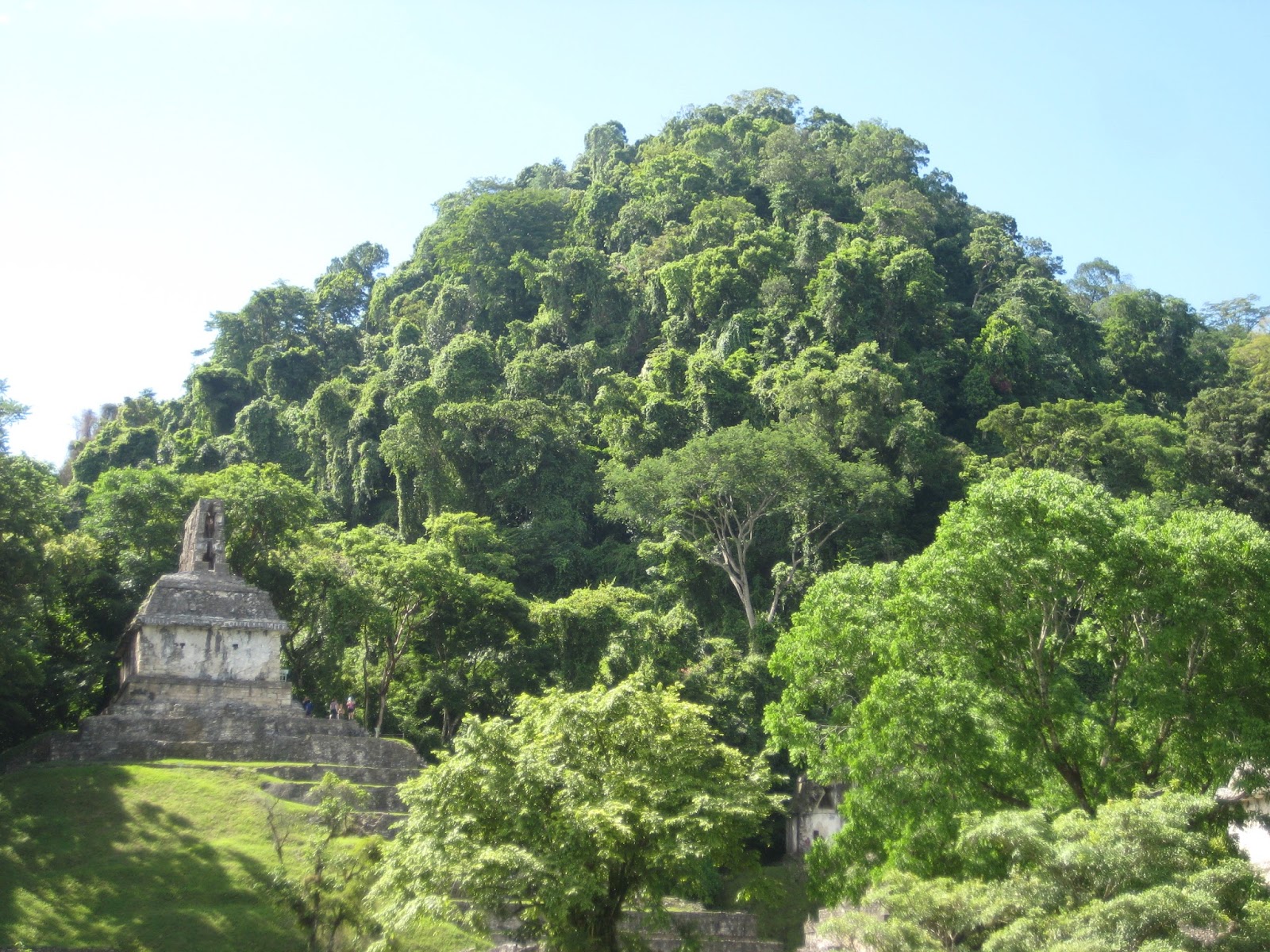
Palenque - a modern name for an ancient city in the Chiapas area, is one of the best preserved Mayan sites.  Much of it is still believed to be buried within the forest for the trees spread far and wide, covering everything if they get a chance.  This empire began around 100 B.C., flourished under the rule of the king Pacal (Sun Shield) and his son Chan Bahlum (Serpent Jaguar) in the 7th and 8th centuries A.D.  Its decline began in the 9th century A.D.

This was also one of the first cities to be re-discovered after many centuries.  In 1746, a Spanish priest, Padre Solis, was sent by his bishop on an exploratory trip to Santo Domingo de Palenque.  He had heard of a buried city and came across impressive remains that lay deep in the forest.  After his reports, several explorers visited the area and each contributed and added to the information that is now available about this site.


Pacal ruled Palenque from 615 A.D. to 683 A.D. and constructed a huge 'Palace' complex.  This may have served as the home for the royal family (there are buildings with naturally air cooled 'bedrooms' - laid out with a stone bed and ventilation channels, systems for sewage management and also water canals) but the complex may also have served as an area for religious and cultural ceremonies.  A large tower rises above the Palace.  This is believed to be a watch tower or, more likely, an astronomical observatory.


Near the palace stands the Temple of Inscriptions - a splendidly built structure, tapering in pyramid style, with a flattened top and a central room filled with intricate, carved symbols.  For a long time, people had been trying to study this central room, however, in 1952, the Mexican archaeologist Alberto Ruz found that this building contained much more than was apparent to the eye.  Hidden by slabs in the floor of the temple lay an entrance to a long staircase.  This led to a high ceilinged crypt - a Funerary Crypt that contained a monolithic, highly inscribed and decorated sarcophagus.  The inscriptions indicated that this was the tomb of King Pacal.


The Temple of Inscriptions was closed for renovation when we went and I was greatly disappointed, for this is one of the highlights of the archaeological site.  I had foolishly avoided visiting a life size model of the tomb at the museum at Mexico City, thinking that I would shortly be seeing the original!  Apparently all the contents of the tomb have also been moved to Mexico City - and there were several treasures that it originally contained.  An amazingly carved funerary mask of jade with eyes of shell and obsidian had been placed over the face of the king.  Two realistic stucco heads, possibly portraits of the king, were placed close by.  The lid of the sarcophagus is a complex relief with astronomical symbols, interpreted by scholars to depict the Cosmic Tree (a symbol of the Milky Way) or the 'White Road' along which the spirit of the dead king travelled before it was reborn into a new life.  The inscriptions mention that Pacal was succeeded by his son Chan Bahlum, who constructed three great temples in this complex in specific cosmological orientations.

The three temples are the Temple of the Sun, the Temple of the Cross and the Temple of the Foliated Cross.  These are also pyramid like structures with flattened tops with roofcombs.  The dedicatory ceremony for the Temple of the Cross was celebrated at a time of the year when three planets were in conjunction with the sun.


Most of the inscriptions and several of the reliefs on the temples have been deciphered and copies are seen in the small but well designed site museum.


We spent the better part of the day walking around, exploring these and many other smaller structures that are clustered around this site.  While each building is partly worn out and sometimes broken, the feel of the entire area - a whole incredibly designed (now ruined) city is intriguing.  One wishes one knew more about the lives and beliefs of those who lived here.


We also took a short walk in the adjoining forest.  Howler monkeys shrieked in the distance and invisible birds called out periodically.  Other than that it was quite still.  Tree roots clambered over small ancient buildings and temple-like structures.  Our guide pointed out trees and plants that were used locally for food, as natural dyes, as medicine.  He broke off a large termite mound and rubbed some termites on his skin - this serves as a mosquito repellent.  Then he popped some in his mouth.  "Delicious!  Minty!  Try them!" he said and we did.  To our surprise they did taste of mint and were rather refreshing.


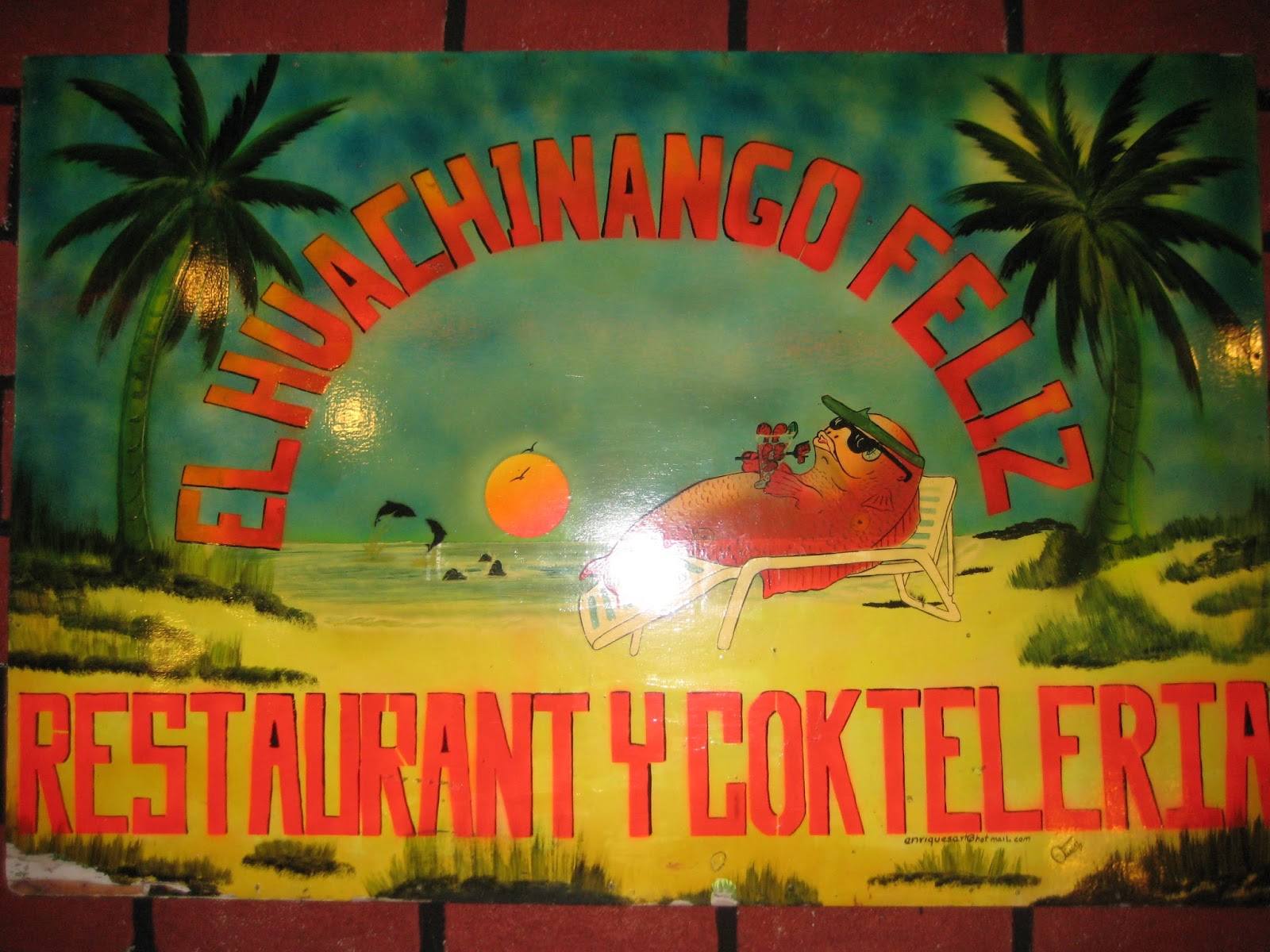
At the end of a long day we trudged back, negotiated (rather fought over) our return fare and took long, hot baths to wash off all the grime and sweat.  We had dinner at El Huachinango Feliz (which roughly translates to 'The Happy Snapper').  This place is packed every evening, with locals and tourists.  Prices are reasonable and service is efficient.  They serve all kinds of Mexican food but are known for their seafood.  Along with our drinks they served a large plate of avocado and small, delicious shrimps witha sprinkling of lemon juice and salt.  This was on the house and a perfect beginning to our large meal.  It was followed by fish and shellfish, cooked in Mexican sauces and served fresh and piping hot!  Then, we somehow managed to walk back to our hotel (a few metres away), climb into bed - and were soon fast asleep.


Thursday, August 15, 2013

Visiting Chiapas - Mexico's Southernmost State

Ruins in Yaxchilan
From Mexico City we flew to Villahermosa (in the state of Tabasco) where the Governor had apparently been doing terribly corrupt things and is now fighting some legal battles.  Tabasco has hit the headlines for this!  It is also known for its sauce and for its ancient Olmec ceremonial site, La Venta, which has now been converted into an outdoor museum that contains (amongst other things) colossal Olmec basalt heads (the largest being over two metres tall).

We had no time to stop here, we immediately took a bus to Palenque and walked from the bus station to our hotel in the tiny town.  Guide books do not rate the town highly, advising people to stay outside in the lush forest guest houses and hotels.  But we liked the town, with its tiny lanes - some green, shaded and quiet and some bustling with people and sounds of loud speakers and generators interspersed with small, interesting shops.

We stayed in hotel Chablis, a 'standard hotel' which we found very clean, comfortable and friendly.  It had a courtyard filled with beautiful plants and walls painted in warm shades of off white, yellow and orange.  The food was good and the service friendly.

Flowers in the hotel courtyard
The first evening, we just walked around to get our bearings.  Everything in this town is within walking distance, which makes it easy to shop, eat and equip oneself for travel.  It's also a blessing because the taxi (and minivan) drivers, like drivers everywhere, over-charge all tourists.  There are regular vans (with irregular prices!) that take one to various tourist destinations around Palenque.  We selected one amongst the many small travel agencies and booked two seats in a van that was going to Yaxchilan and Bonampak the following day.  Then we bought some supplies and headed back towards our hotel for dinner.

We ate in an elegant restaurant close to the hotel, that served a fixed price, three course meal.  It was a delicious dinner that began with glasses of house wine, tacos and salsa and continued till we were too full to move.

Maya Canada restaurant
Tacos and salsa
Soup made of local greens
Vegetable soup
Fish in cilantro sauce
Grilled pork, banana and beans with tortillas
Fresh mango ice cream
The next day we rose early, ate some mangoes in our hotel room and were ready before sunrise, waiting for the van.  The van arrived duly and we were packed in like sardines along with various other tourists, negotiating for space and air conditioning vents.  We sped off towards the border of Mexico and Guatemala, stopping on the way for a pleasant buffet breakfast at a spot that every tourist bus seemed to halt at.  Eggs in vast quantities (the Mexicans have an infinite and delicious variety of egg dishes), breads, beans, pork, tortillas, coffee, tea, fruit and more.

Continued, rather sleepily, towards the valley of the river Usumancinta, where Yaxchilan is located.  Yaxchilan, rediscovered in 1881, was an important classic Mayan city, built strategically to control river commerce in the area.  Many of the large structures were gradually taken over by forests but it is still an impressive sight and a very scenic location.  The surviving monuments include stelae, altars and lintels with elaborate relief carvings and also distinctive 'roofcombs' that decorate the tops of the buildings.  The reliefs and some inscribed texts tell us that Yaxchilan was ruled by kings of a single dynasty (and peaked in power between the 7th and 9th centuries A.D.); some important figures depicted are the rulers "Bird Jaguar" and "Shield Jaguar" and "Lady Xoc", the wife of Shield Jaguar.

Along the river Usmancinta
Roofcombs of Yaxchilan
A surviving relief
To reach Yaxchilan, we took a boat a long way up the river; it was a beautiful ride with thick forest on either side.  Then we walked around amidst the sprawling ruins, surrounded by water and greenery and saw (heard!) the howler monkeys making their eerie calls.  Then we retraced our path, back through the forest, down the river and stopped at a very pleasant roadside place where long tables had been laid out for our lunch.

After a substantial meal, we headed southwards, to the valley of the Rio Lacanha, a tributary of the Usmancinta, to see the ruins of Bonampak.  This city of 'Painted Walls' (as the name indicates) also dates to the same period as Yaxchilan.  There was apparently a significant alliance between the two cities in the Classic Mayan period.  Bonampak was more deeply hidden by the forest and came to light only in 1946.

Bonampak is in a reserved area so we could only use the reservation vehicles (which were rickety and completely airless) to the entrance.  After that, it was a pleasant walk, past rows of small stalls where locals sold crafts and bead jewellery, to the actual ruins.  Along the way I saw what seemed like small leaves scurrying along rapidly.  It looked surreal but a closer glance revealed a row of ants carrying bits of leaves larger than themselves, across our path!

Walking leaves of Bonampak!
Bonampak has a few small structures and carvings that are strewn around but the main area that still stands is a series of rooms filled with frescoes in vibrant colours (or whatever remains of them).  The rooms show ritual preparations for war, scenes of war, celebrations of a victory and conclude with a depiction of a sacrificial ritual (rather bloodthirsty!) in which the victims are being offered to the gods.  Replicas of the original paintings (or what they must have originally looked like) are on display at the Museum of Anthropology in Mexico City.

Frescoes
More frescoes, in fragile condition
After this we trooped back, tired, sat in the airless van, returned to our own van (which seemed luxurious by comparison) and quietly drove back.  One by one, we were dropped off at our hotels.  We had a quick (and very restorative) bath, then walked around in search of a place to eat.  Discovered an excellent seafood restaurant - but more about that later (I'm running out of space)!
#Header1_headerimg { margin: 0px auto }